
10.04.2026 — startups, finance, how-to
🏰 Takeaways about Startups
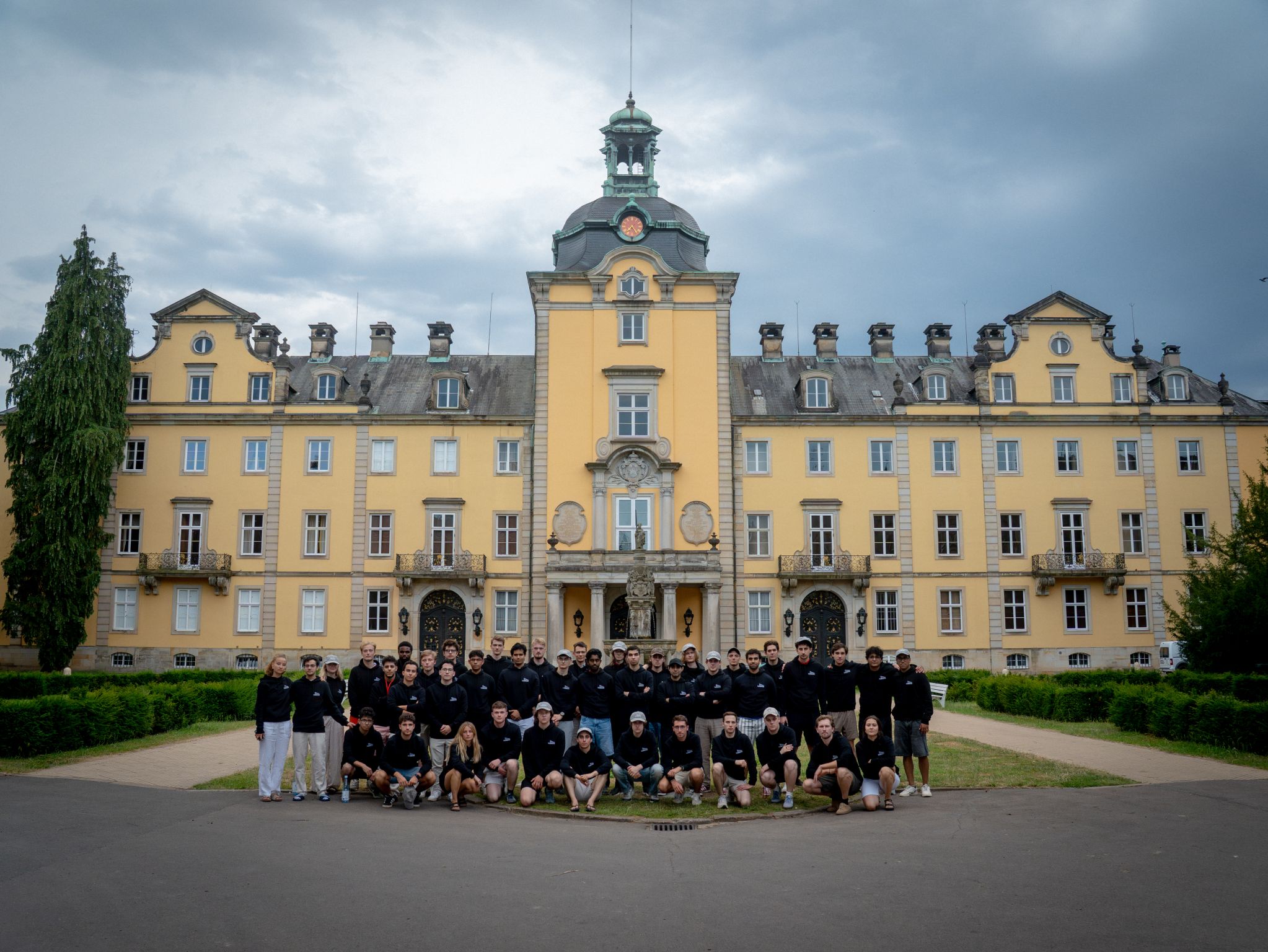
As a participant in the Entrepreneurs First program, I’ve been staying at a castle1 in Germany with around 40 other ambitious founders for two months.
During this time, I’ve met some incredible people, including Matt Clifford, Alice Bentinck, Eric Quidenus-Wahlforss, Niklas Jansen, Tom Hollands, Anastasia Wolter, Julia Denoly, and many others. Their insights have been invaluable, and I want to share some of the key notes and takeaways here.
It’s worth noting that I don’t necessarily agree with all of the advice, and there are always more layers to consider. For instance, contrary to common advice, I had two co-founders - for good reason.
General
The only thing that matters is money.
This subsequently includes market, traction, revenue, ambition, pivotability and the team. Those are also the main criteria investors will care about.
Be aware that you might fail, and come to terms with it as early as possible. There is no playbook for creating something new, which is why you will encounter contradictory and incoherent advice. You will have to find out for yourself which advice is good and which isn’t, what works and what doesn’t. Advice is advice—not a rule set in stone.
You can’t eliminate the uncertainty but you can embrace it. Learning to navigate the unknown quickly separates good founders from bad ones. Indecision always leads to failure. Delaying choices only drains momentum. Even if you make the wrong call, you can still adjust later. Staying stuck is worse than being wrong.
Gut feeling and people-driven approaches are valid. Data helps, but it’s often lagging behind reality. Trusting your instincts and surrounding yourself with the right people can be just as decisive as any data.
Being able to bluff (not lie!) and to tell a great story as a founder is key. People often respond more to the story and idea than to the raw numbers. A strong narrative creates excitement and can buy you the time and trust you need to actually deliver.
Use whatever software and automation you need to move as quickly as possible. Your speed is the best ressource, so anything that enhances it is worth adopting. Taking advantage of free tools, startup credits, and automation can make the difference between success and lacking behind.
Startups let you impose your will on the world This power is rare, and it comes with both the freedom to create and the responsibility to endure.
Market
Ask yourself: Is the market good? Is it big? What’s the overall market you’re operating on? Get some numbers! Market quality matters more than product quality initially. Can you realistically reach $100M revenue in this market? Calculate: customers needed × pricing × retention. Run some basic numbers to see if there’s a real chance to make it big and under what conditions.
When it comes to small markets vs. big markets, both have advantages and disadvantages. Small markets can work well if you can map out a convincing story of future growth, but they are harder to dominate at the start. Big markets, on the other hand, are attractive but usually come with more incumbents and tougher competition.
There are a few key market questions before customer discovery you should always ask: What’s the total addressable market size? What’s customer willingness to pay? And how many customers are needed for meaningful revenue?
Then consider B2B vs. B2C.
- B2B: This usually follows the path of customer development → pilots → ARR progression. It’s a more derisked playbook if you want to raise $1–5 million.
- B2C: This is harder to build, often grows quickly, and then crashes. The focus should be on engagement and a clear path to revenue. For example, Cleo’s secret was using memes for Gen Z money management. Usually, B2C startups follow one of two paths: solving known problems (Google) or experimenting with new behaviors (Snapchat).
Always listen to customers. Work directly with (US) customers to understand their problems and gather willingness-to-pay data as early as possible. Find validation that they would actually spend money on your solution. Building a US network and advisors before moving there can be critical.
You also need to obtain a secret and market intelligence. This helps you build a product with minimal competition. Leverage connections for market intelligence. The junior VC level is to see every company in the sector. The standout level is to learn something novel and contrarian. The top tier is to play insights back to customers that surprise them—something they didn’t even realize themselves.
Don’t become a consulting company.
Also, don’t work on developer tools unless you have a very deep understanding of customers. The space is extremely competitive. If you go down this path, focus on defense through strong customer insights, specific use cases, and an exceptional customer experience.
A psychological adjustment is needed for the American business mentality, especially if you’re coming from Europe. European “innovations” are often 3+ years behind the US market. Exposure to San Francisco provides earlier reality checks, and being a “small fish in a big pond” accelerates learning immensely.
It is also a good idea to work on whatever improves exponentially as AI models improve.
Most importantly, focus on big problems that can make lots of money. Build massive companies with global importance. Choose products that genuinely help people, not just distract them. Elegant, simple ideas with major impact tend to win. Consumer apps are becoming hot again after years of weaker investment.
And finally, recognize that people love to pay for AI. It creates a short path from sign-up to the “wow moment,” which makes it one of the strongest monetization drivers today.
Outreach
Reach out before you have a product. Don’t wait until everything is built—early conversations are essential for shaping what you’re building.
Leverage personal network and LinkedIn connections. If you’re not hitting LinkedIn’s limits for connection requests, your outreach probably isn’t enough. Also, use multiple outreach methods. There is no single silver bullet. Try different approaches across different platforms to see what works best. Avoid mass cold emails, prefer personalized outreach. Use AI if needed to personalize messages or generate summaries—it makes a difference when people feel you’re speaking directly to them. Record calls. They are invaluable not just for learning and improving, but also as proof of traction you can show to investors.
Use software and tools as needed to support outreach. Tools can save time and structure your efforts. For example:
- Leads: Apollo, Zoominfo, LinkedIn Sales Navigator (cheaper when region is lebanon / argentina)
- Sales Copy: Lavender
- AI Outreach: Kula, Telescope, Bluebirds, Intently
- Track: Yesware, Rebump, Streak
Use niche online communities. For example, Limited Supply is a strong place for DTC marketers. Finding the right community can help you connect with highly relevant early adopters.
Volume matters—be large at the beginning. For example, if you reach out to 5000 people and 10% respond, that gives you 500 conversations. If just 2% of those are truly interested, you already have 5 early adopters.
Become creative. Don’t be afraid to experiment. A simple trick is to pretend you’re a student seeking advice—people tend to respond generously to that.
Ideation
Evaluate ideas based on market need, technical feasibility, and team strengths. A good idea on paper isn’t enough—it has to fit the market, be technically possible, and align with what your team can actually deliver.
Pivot as often as needed. Pivoting 8–9 times is absolutely fine, as long as you treat it as linear progress moving toward a clearer target. Good ideas can become bad with more thought, and the best time to make a change is always early.
Love your idea. Fall in love with what you’re building. Ask yourself: do you truly care about the problem? Do you really care about the people you’re serving? Many founders who succeed financially still end up depressed because they never liked what they were working on.
Hate your idea. At the same time, don’t fall in love so much that you can’t see when it doesn’t work out. Can you recognize when the idea is failing? Can you kill it without hesitation when necessary?
Find something you can work on for the next 10 years. Admit when the initial vision isn’t right, and don’t waste years on projects that don’t inspire passion. Kill projects quickly if the drive isn’t there. Going from no cofounder or idea to a $1.5M raise in 9 months is possible—but the opposite is also true: you could waste 7 years on something you never truly cared about.
Personal
Be paranoid and highly optimistic at once. Founders have to live with conflicting mentalities, often operating in the gray area between extremes. Sometimes it’s about balance, other times it’s about knowing when to switch from one extreme to the other.
Be around people who are obsessed with what they do. Surrounding yourself with that kind of energy fuels your own drive. Being more obsessed than others and moving fast gets you places. Speed and intensity are often the deciding factors in early success.
Learning (and basically everything else) has to be 10x faster. The EU might be the underdog, but many EU founders still succeed because they are seen as technical and smart. The speed of learning is often what closes that gap.
Be more ambitious—aim two levels higher than you usually would. Set targets that feel uncomfortably bold; they force you to stretch beyond the ordinary. However, Like VO₂max, compete at the max sustainable output. Push yourself hard, but don’t burn out—mental health is part of long-term performance. Own your outcomes. Take responsibility for results—good or bad—and act with high agency. Be able to be true to yourself. Authenticity matters, especially when the pressure is high.
Be willing to make the wrong decision fast and reverse if it doesn’t work. Progress comes from acting decisively. If it’s the wrong move, you can adjust quickly, but hesitation costs more than mistakes.
Have high standards Don’t compromise on hiring or on product quality. Once standards slip, it becomes very hard to recover.
Have an edge
Usually what you have done (experience), what you know (knowledge) or what you can build (skills). There are three types: tech, market, and catalyst. Try to have atleast one good edge.
Co-founders
Alignment and productivity over friendship. Friendship is important, but it can’t replace fundamental alignment on vision and goals. Complementary skill sets work best. Avoid duplicate roles, since overlapping skills create inefficiencies instead of momentum. Questions to ask yourself: Do I feel lucky to work with this co-founder? Is this the right problem to tackle? Is this the most productive team I’ve ever been part of? There are usually two categories of founders. Understand which you and your co-founder(s) are, and how that aligns:
- Sector-agnostic builders who love to create with their hands and brains.
- Mission-driven individuals who are deeply passionate about solving a specific problem.
There are three critical points in time.
- 24–48 hours: A good co-founding relationship creates multiplier effects. It should feel like you’re making far more progress than you possibly could alone. If not, have an honest conversation and consider breaking up.
- Week 2: If there’s no meaningful progress, it’s time for a serious discussion. If both feel bad, break up. If both feel good, continue.
- Week 5: By this point you should either feel great or feel terrible. Act accordingly—don’t ignore the signs.
Celebrate breakups when they’re early. It’s always better to break up now than later. Be confident and strict about it—each additional day spent on a broken team wastes more time and energy.
Most investors prefer two-person teams. Two founders can usually cover more ground than one. Starting a company is brutal, and having a co-founder means sharing the burden while avoiding the bureaucracy of larger groups. Disagreements also tend to be resolved faster than in bigger teams. A single founder has to wear all the hats and faces loneliness and burnout. Plus, if you couldn’t convince even one person to join you, it raises the question: is there a problem with your idea or your leadership? On the other hand, more than two founders often means more opinions, slower decision-making, and slower execution. Splitting equity among three or more can also be messy, and overlapping skills can lead to wasted resources.
Feedback
Open feedback is the only way to build massive progress in intense, ambitious environments. Honest and timely feedback ensures that mistakes are caught early and improvements compound quickly.
Benchmark progress against other teams or get external perspectives. Compare yourself to others. Comparing yourself to peers or seeking outside input can reveal blind spots and highlight areas for improvement that internal teams might miss.
Use Frameworks:
- OEPS model:
Observe → Effect → Pause → Suggest. This helps structure feedback and ensures clarity. - SKS model:
Stop → Keep → Start. Quickly identifies what should change, continue, or begin. - Stanford model:
I like → I wish → What if. Encourages constructive suggestions without judgment. - PPPs for monitoring:
Progress, Problems, and Plans. Keep track of what’s working, what’s not, and what comes next. - Play it forward:
Extrapolate current trajectory to future outcomes to anticipate challenges and opportunities.
Use reflective listening—playback what you’re hearing. This ensures understanding, confirms alignment, and avoids miscommunication in fast-moving environments.
Product
Extensive customer discovery before building. Know EXACTLY what customers want before you start building anything. Understanding their pain points and priorities ensures you build something people will actually pay for.
If necessary, sell the product before you have built it. This validates demand and shows whether people are willing to spend money. You can use mockups and demos for presentations. Make sure not to spend money until you confirm interest. If you aren’t finished in time, reframe it to your advantage—explain that you’re integrating improvements to offer the best experience and offer a small discount for the delay. Stay communicative throughout the process.
Start charging from day one. Don’t offer free pilots. If users won’t pay initially, they’re unlikely to pay later. Early commitment indicates genuine demand.
Create a product so good that when you take it away, people want it back. At the same time, if you’re not embarrassed by your first product, you launched it too late. Don’t wait for perfection; iteration comes from real-world use.
Simplest value proposition and user experience is key. Focus on clarity and ease of use—complexity kills adoption.
Strategy and Competition
Address leadership early, not later. Clarify roles, responsibilities, and decision-making authority before problems escalate. Limit the number of veto holders for as long as possible. This allows startups to move much faster than everyone else and avoid unnecessary slowdowns. Don’t be scared to make reversible decisions fast. Quick, iterative choices keep momentum high and allow you to adapt on the fly. This speed creates a virtuous cycle. Fast growth attracts media attention, which draws the best talent, enabling even faster growth and stronger partnerships. After 3-4 years, a lot of success is based on momentum. The compounding effect of early wins accelerates opportunities and credibility.
Patience vs. speed is a serious conflict. Move slow to move fast—take the time to explore, learn, and deeply understand before making irreversible moves.
Don’t get distracted by competitors. In the early phase, your main threats are the market, the product, and your co-founders—not other companies. However, share minimal information with competition. Protect your strategic insights while still collaborating when necessary.
First-mover advantage is currently underestimated. Being first gives you insights and understanding that competitors will struggle to replicate. Having an insight (secret) at scale is very hard to replicate—products are not. In today’s world, copying a product is easy; reverse-engineering the reasoning, insights, or strategic vision behind it is much harder.
Revenue, ambition, and visibility. These are crucial for small companies competing in the US market. Excelling in all three will make you recognized and respected.
VCs
VC = Big Bets
VC is is for big ideas and big bets. If you’re not aiming big, you probably don’t need VC. VC rewards ambition, not caution.
Raising VC is like a drug. Once you start, you can’t stop—you have to play the game (i.e. SaaS), scale fast, and commit to growth. Be fully aware of that.
Think it ALL through. If a VC can spot something in 30 minutes that you didn’t anticipate after weeks or months of work, you’re f*cked. Consider all possible questions and outcomes. Know what you don’t know. Ask yourself: Why you? Why now? Why isn’t anyone else doing this? Could others do it better? Prepare for all the tough, uncomfortable questions in advance.
Know your numbers. Sloppiness is unacceptable. Understand your TAM thoroughly, preferably with a bottom-up approach. Use the pyramid principle for communication. Structure your points logically, from the conclusion down to the details, for maximum clarity. Give dopamine shots. Identify what excites a VC and deliver it repeatedly. Highlight numbers, facts, and growth potential that spark enthusiasm and demonstrate why the opportunity is exciting. Reframe weaknesses as strengths. Showing that you’ve considered potential pitfalls and have solutions ready turns concerns into confidence. When a VC can’t find a real weakness and you are prepared for every question, you essentially win. Every answer should be persuasive. Add stories or anecdotes to bring your company to life. Stories demonstrate depth, captivate attention, and show why you care about your mission. Articulate differentiation clearly. Make it obvious why your company is unique and hard to replicate.
Show confidence and conviction. Even if answers evolve with new information, deliver them with certainty. Confidence is contagious.
Prepare extensively with a detailed memo (more valuable than a deck). Practice your demo day pitch 100+ times. Most investors make decisions based on one of three factors:
- Market – the macro opportunity
- Product – the micro execution
- Team – the individual factor
Incorporate in the US to build a global company and prioritize the US market first. Try pre-demo day fundraising with angels. Early traction and validation help push your valuation. Great founders + great market = push the valuation cap. Initiate conversations with European investors early, as their process typically takes longer.
Bar is very high today. Only exceptional preparation, insight, and execution will succeed.
Hiring
Your culture should be set by the character of the founders. Apply your own taste and standards from day one.
Early employees are idiots. They take on 50% of the risk but only get 1/30 of the equity. Convince them—it’s your job to sell the vision. The first and second employees are trendsetters. The patterns they establish compound over time, either positively or negatively. Culture and quality are determined by the first 3–4 people you hire. These initial hires shape the company’s DNA.
How to find the best people?
- List the 10 most impressive people you know and have worked with.
- Sell your vision hard and get at least two of them onboard.
- Ask them for their 10 most impressive people list.
- If you haven’t worked with impressive people yet, something is off—start building your network.
When hiring, don’t compete with other companies on all dimensions. Focus on one dimension where you’re exceptionally strong and use it to your advantage. Make the story of your company so weird and different that it naturally attracts the right type of people. Use counter-signaling. Do the opposite of what others are doing—but do it meaningfully and in a useful way. Don’t imitate other companies. Originality attracts talent; mimicry repels it.
Americans hire more easily.
Pitfalls
- Building too early
- Desk-based customer research
- Talking to the wrong people
- Letting productivity mask problems
- Mistaking activity for productivity
- Small markets
- Falling in love with ideas
Misc
Books:
- No Rules Rules: Netflix and the Culture of Reinvention - Erin Meyer
- 7 Powers: The Foundations of Business Strategy - Hamilton Helmer
- The Great CEO Within: The Tactical Guide to Company Building - Matt Mochary & Alex MacCaw
- The Mom Test: How to talk to customers & learn if your business is a good idea when everyone is lying to you - Rob Fitzpatrick
- 50 Questions to Explore with a Potential Co-Founder - FIRST ROUND REVIEW
- The Outbound OS Playbook - Aaron Reeves
- Modern Discovery - Brian LaManna
- The Art of Cold Outreach - Calendly
Revenue quality hierarchy:
Monthly and annual contracts are best, followed by signed, paying customers who have passed tests. Pilots are the weakest. LOIs and POCs are meaningless bullsh*t.
Demo day traction benchmarks:
- $100k pipeline about to convert
- $150k revenue booked
- $150k about to be booked
- $500k ARR
Fundraising timeline indicators:
- A tough fundraise in the US takes four weeks.
- A strong fundraise in the US can happen in just a few days.
Framework for cold outreach:
Vision → Framing → Weakness → Pedestal → Ask
Example: “We work on […]. We don’t have […], but we can do […]. Right now our problem is […]. Since you have extensive experience in […] from […], your insight could be a big help. Are you available at […] for a chat about this?”